

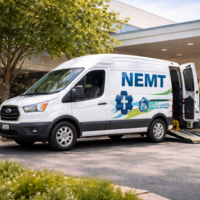
The demand for non-emergency medical transportation in Illinois is growing. An aging population, Medicaid expansion, and a healthcare system that increasingly relies on outpatient care are creating real opportunities for entrepreneurs who want to enter the NEMT space. But before you put your first vehicle on the road, you need to understand the insurance requirements that will make or break your business.
This guide walks you through the insurance side of starting a NEMT company in Illinois — what coverage you need, why you need it, and how to make sure your policies satisfy the contracts you’ll sign with Medicaid managed care organizations and healthcare facilities.
Why Insurance Is the First Thing You Should Figure Out
Many aspiring NEMT operators focus on vehicles, licensing, and Medicaid enrollment first, and treat insurance as an afterthought. That’s a mistake. Insurance is often the hardest piece of the puzzle for new NEMT businesses because not every carrier will write a policy for a new venture with no operating history. The time to start shopping for insurance is before you buy your first vehicle — not after.
The reason is simple: your Medicaid MCO contracts, your transportation broker agreements, and your facility partnerships all have specific insurance requirements. If you can’t meet those requirements, you can’t sign those contracts. If you can’t sign those contracts, you don’t have revenue.
Commercial Auto Insurance: The Foundation of Your NEMT Business
Commercial auto insurance is the single most important coverage for any NEMT operation. It protects your vehicles, your passengers, your drivers, and your business when an accident happens on the road.
In Illinois, you cannot legally operate a vehicle-for-hire on a personal auto policy. Personal auto insurance explicitly excludes commercial use. If you’re transporting Medicaid patients using a personal policy and have an accident, your insurer will deny the claim. You’ll be personally liable for all damages, medical expenses, and legal defense — and you’ll face regulatory consequences that could end your business before it starts.
For NEMT operators in Illinois, the standard commercial auto liability requirement is $1,000,000 per occurrence. Some Medicaid managed care organizations and transportation brokers require higher limits, sometimes up to $1,500,000 combined single limit. Your commercial auto policy should include bodily injury and property damage liability, medical payments coverage for passengers regardless of fault, uninsured and underinsured motorist coverage, comprehensive and collision for your vehicles, and coverage for specialized equipment like wheelchair lifts, ramps, and stretcher mounts.
If you’re launching with a single wheelchair van, expect to pay roughly $3,000 to $8,000 per year for commercial auto insurance. New ventures with no operating history typically pay at the higher end of that range. An insurance agent who specializes in NEMT can help you find carriers willing to write new businesses at competitive rates.
NEMT commercial auto insurance in Illinois
General Liability Insurance
General liability covers injuries and property damage that happen outside your vehicles. A passenger slips while walking to your van. A driver accidentally damages a handrail at a dialysis center. A wheelchair scrapes a doorframe during pickup. These are all general liability claims, not commercial auto claims, and they happen more frequently than most new operators expect.
Most Medicaid contracts in Illinois require general liability limits of $1,000,000 per occurrence and $2,000,000 aggregate. Hospitals, nursing homes, and outpatient facilities will also require proof of general liability before allowing your vehicles to operate on their property.
Workers Compensation Insurance
If you have any employees in Illinois — including drivers and patient care aides — you are required by state law to carry workers compensation insurance. Illinois has no minimum employee threshold; even one employee triggers the requirement.
In the NEMT business, the most common workers comp claims come from lifting injuries. Helping patients in and out of vehicles, loading and securing wheelchairs, and transferring stretcher-bound patients all carry physical risk. Back injuries, shoulder injuries, and repetitive strain are the most frequent claims. Workers compensation covers the medical bills and lost wages for those injuries, and it protects you from being sued by your own employees.
Hired and Non-Owned Auto Coverage
This is a coverage that many new NEMT operators overlook, but it’s frequently required by Medicaid MCOs and transportation brokers in Illinois. Hired and non-owned auto insurance covers liability when your employees use their personal vehicles for company-related tasks, or when you rent or borrow a vehicle. Even something as routine as a driver using their own car to commute to your lot to pick up a company van creates a coverage gap without this policy.
Commercial Umbrella Insurance
An umbrella policy provides additional liability limits above your commercial auto and general liability policies. When you’re transporting medically fragile passengers — people in wheelchairs, on stretchers, recovering from surgery, or undergoing dialysis treatment — a single catastrophic accident can produce claims that exceed your primary coverage limits. An umbrella policy with $1,000,000 or more in additional coverage is relatively inexpensive and provides a critical financial safety net.
Many Medicaid MCOs now require NEMT providers to carry umbrella coverage as a condition of their contracts, so this is increasingly a must-have rather than a nice-to-have.
How to Get Insured as a New NEMT Venture
The biggest challenge new NEMT operators face is finding carriers willing to write a policy for a company with no operating history. Many standard commercial auto carriers won’t touch a new NEMT venture. This is where working with an independent insurance agency — rather than going directly to a single carrier — makes a significant difference.
An independent agency like Handzel & Associates works with multiple carriers, including those that specialize in writing new NEMT businesses. We can shop your account across several markets to find coverage that meets your contractual requirements at the most competitive rate available. Having drivers with clean commercial driving records, completed NEMT-specific training, and a solid business plan will all improve your options and pricing.
Putting It All Together
Before you put your first NEMT vehicle on the road in Illinois, you need to have your insurance program in place. At minimum, that means commercial auto liability at $1,000,000 per occurrence, general liability at $1,000,000 per occurrence with a $2,000,000 aggregate, workers compensation at Illinois statutory limits if you have employees, hired and non-owned auto coverage, and ideally a commercial umbrella policy of $1,000,000 or more.
Start the insurance process early — at least 30 to 60 days before you plan to begin operations. This gives you time to shop carriers, compare options, and make sure your coverage aligns with every contract you’ll need to sign.
Need help finding the right NEMT insurance? Handzel & Associates has been protecting Illinois businesses since 1989. Call (773) 725-6767 or visit handzel.com/business/nemt-insurance to get a free quote.